Medical Office & Healthcare Facility Cleaning in NY: OSHA, CDC, and Infection Control Compliance
October 22, 2026The High-Stakes Reality of Medical Office Cleaning in Upstate New York
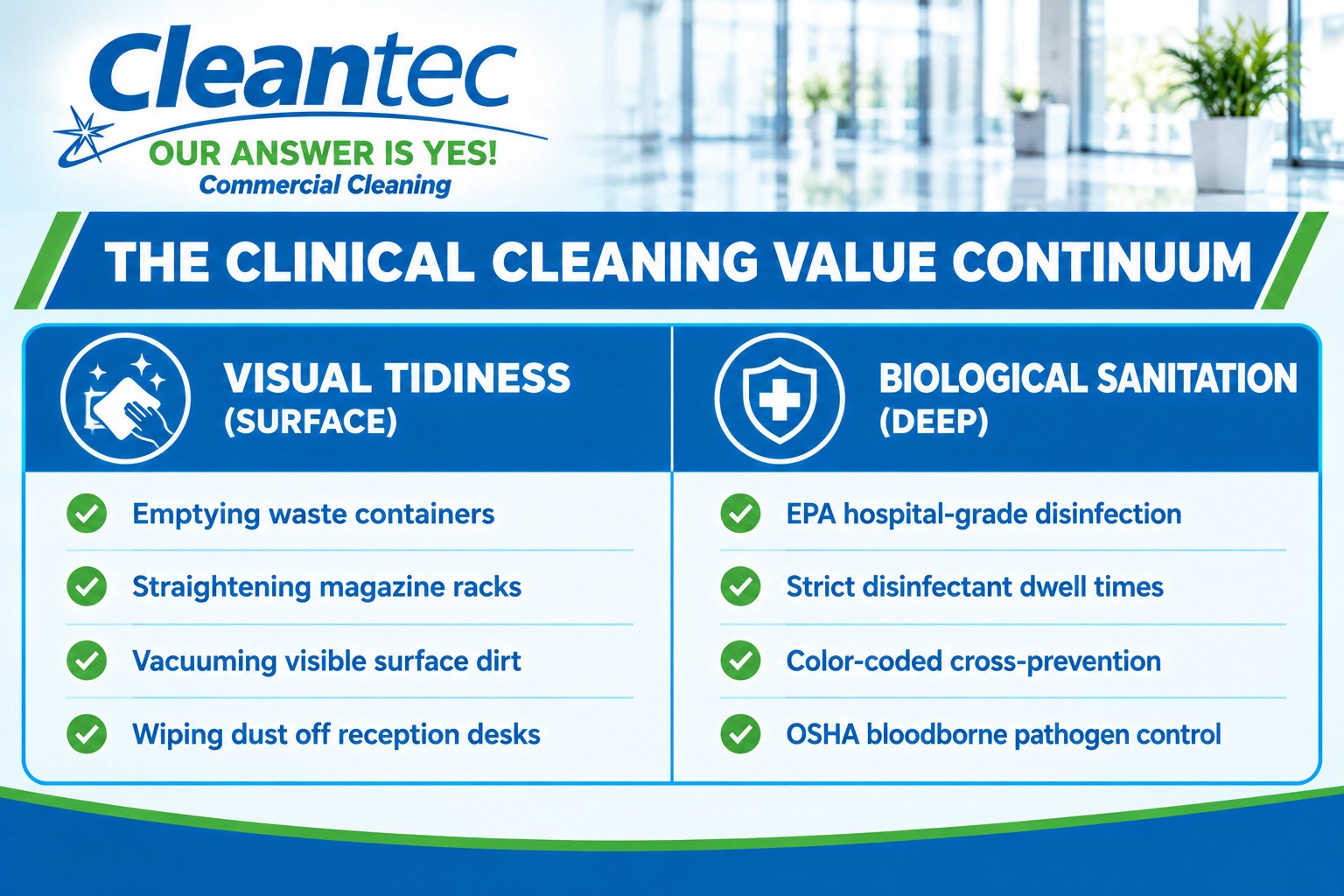
Medical office and healthcare facility management carries unique responsibilities that standard commercial properties never face. While a general office lobby only requires surface tidiness, a medical waiting room or examination suite must be biologically safe for vulnerable patients and clinical staff. Pathogens such as Methicillin-resistant Staphylococcus aureus (MRSA), Clostridioides difficile (C. diff), norovirus, and seasonal influenza viruses survive on hard surfaces for days or even months. Without systematic sanitation protocols, high-touch clinical surfaces turn into dangerous vectors for healthcare-associated infections (HAIs).
Medical practices across Upstate New York encounter distinct environmental strains. Regional weather patterns in Upstate New York bring winter road salt, slush, mud, and seasonal moisture directly into healthcare lobbies. These contaminants degrade floor finishes, track organic matter into clinical zones, and complicate daily environmental control efforts. Managing these local weather challenges while maintaining clinical sterile boundaries demands systematic expertise rather than casual sweeping.
Cleantec has served as Upstate New York’s trusted commercial cleaning partner since 1975. Over five decades of local service, Cleantec has expanded from a Central New York operation into an established regional provider across Buffalo, Rochester, Syracuse, Albany, Ithaca, and Binghamton. Holding the ISSA CIMS GB with Honors accreditation, Cleantec delivers specialized commercial cleaning services engineered to meet United States Green Building Council (USGBC) standards and strict healthcare mandates.
Outsourcing specialized medical office cleaning to an experienced regional leader allows healthcare providers to protect patient health, maintain strict compliance, and shield their practices from liability.
Regulatory Foundations: OSHA Bloodborne Pathogens Standard and Liability
Maintaining compliance in a New York healthcare environment begins with understanding federal safety mandates. The Occupational Safety and Health Administration (OSHA) enforces strict rules designed to protect workers from pathogenic exposure in clinical settings.
Understanding OSHA 1910.1030 Requirements
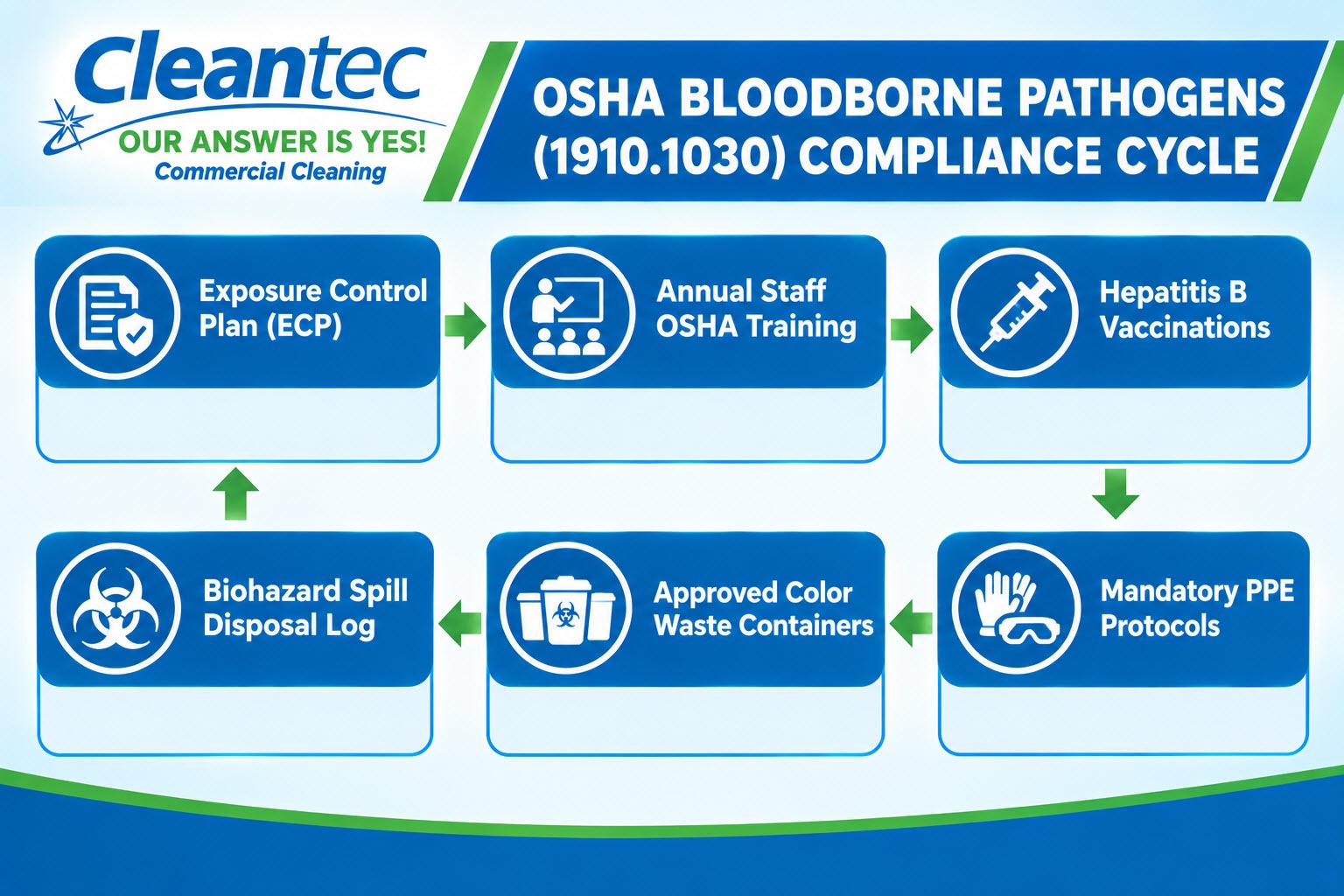
The OSHA Bloodborne Pathogens Standard (29 CFR 1910.1030) mandates that employers protect workers who face occupational exposure to blood or other potentially infectious materials (OPIM). Healthcare facility directors must implement a written Exposure Control Plan (ECP) updated every twelve months. This standard governs every aspect of sanitation, from how technicians wipe an exam table to how spent rags are laundered.
Key Components of OSHA Environmental Compliance
- Personal Protective Equipment (PPE): Cleaning technicians must wear appropriate PPE, including nitrile gloves, eye protection, and fluid-resistant gowns during biohazard cleanup.
- Universal Precautions: Cleaning staff must treat all human blood and bodily fluids as infectious, applying standardized containment protocols regardless of patient history.
- Sharps and Biohazard Waste Management: Contaminated waste must be segregated into color-coded, leak-proof containers bearing visible biohazard symbols.
- Decontamination Protocols: Working surfaces touched by blood or OPIM must be decontaminated using appropriate chemical agents immediately after tasks end.
Non-compliance carries heavy consequences. OSHA penalties for serious violations exceed $16,000 per occurrence, while willful or repeated failures surpass $160,000 per infraction. Beyond regulatory fines, improper sanitation exposes practices to medical malpractice claims and severe reputational damage.
Cleantec’s janitorial services protect healthcare providers by employing thoroughly vetted, bonded, and insured cleaning technicians trained extensively in OSHA protocols. Cleantec maintains complete compliance documentation, giving practice managers total peace of mind during unexpected regulatory audits.
CDC Guidelines for Environmental Infection Control in Healthcare Facilities
The Centers for Disease Control and Prevention (CDC) publishes authoritative guidelines for environmental infection control in clinical spaces. While OSHA focuses on worker safety, CDC guidelines focus on preventing disease transmission among patients, staff, and visitors.
Applying the Spaulding Classification in Environmental Care
The CDC adapts the Spaulding Classification framework to assess surface risk levels within medical facilities:
- Non-Critical Surfaces: Items contacting intact skin, such as blood pressure cuffs, examination tables, waiting room chairs, and crutches. These require low-to-intermediate level disinfection.
- Environmental Surfaces (Housekeeping): Floors, walls, window sills, and light switches. Although these do not contact patients directly, hands transfer pathogens between environmental surfaces and clinical sites.
Breaking the Chain of Infection
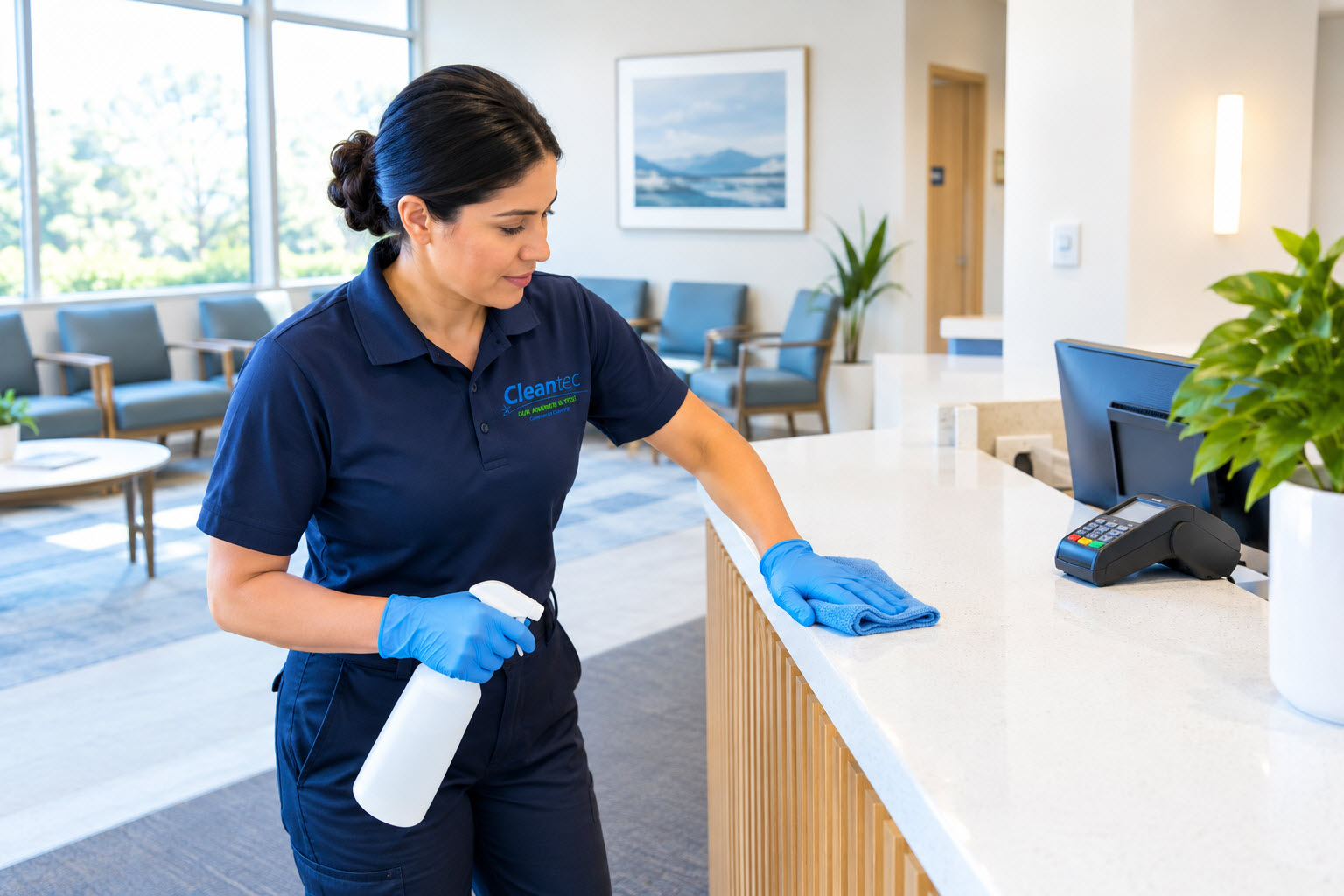
Pathogens spread through direct contact, indirect contact via contaminated objects, or airborne droplets. High-touch objects in medical waiting rooms, such as door handles, counter edges, clipboard pens, and bathroom faucets, accumulate viral loads within minutes of opening.
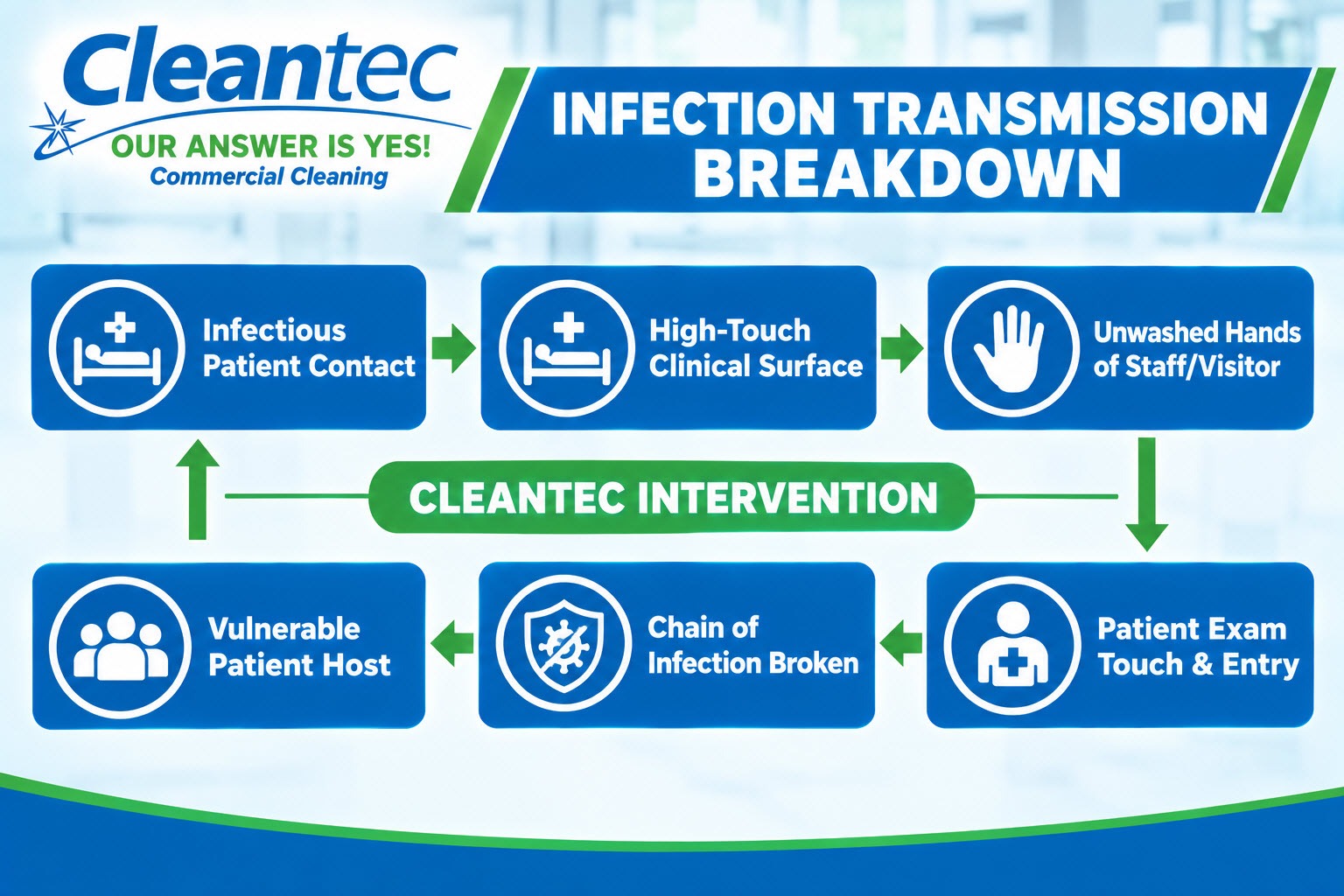
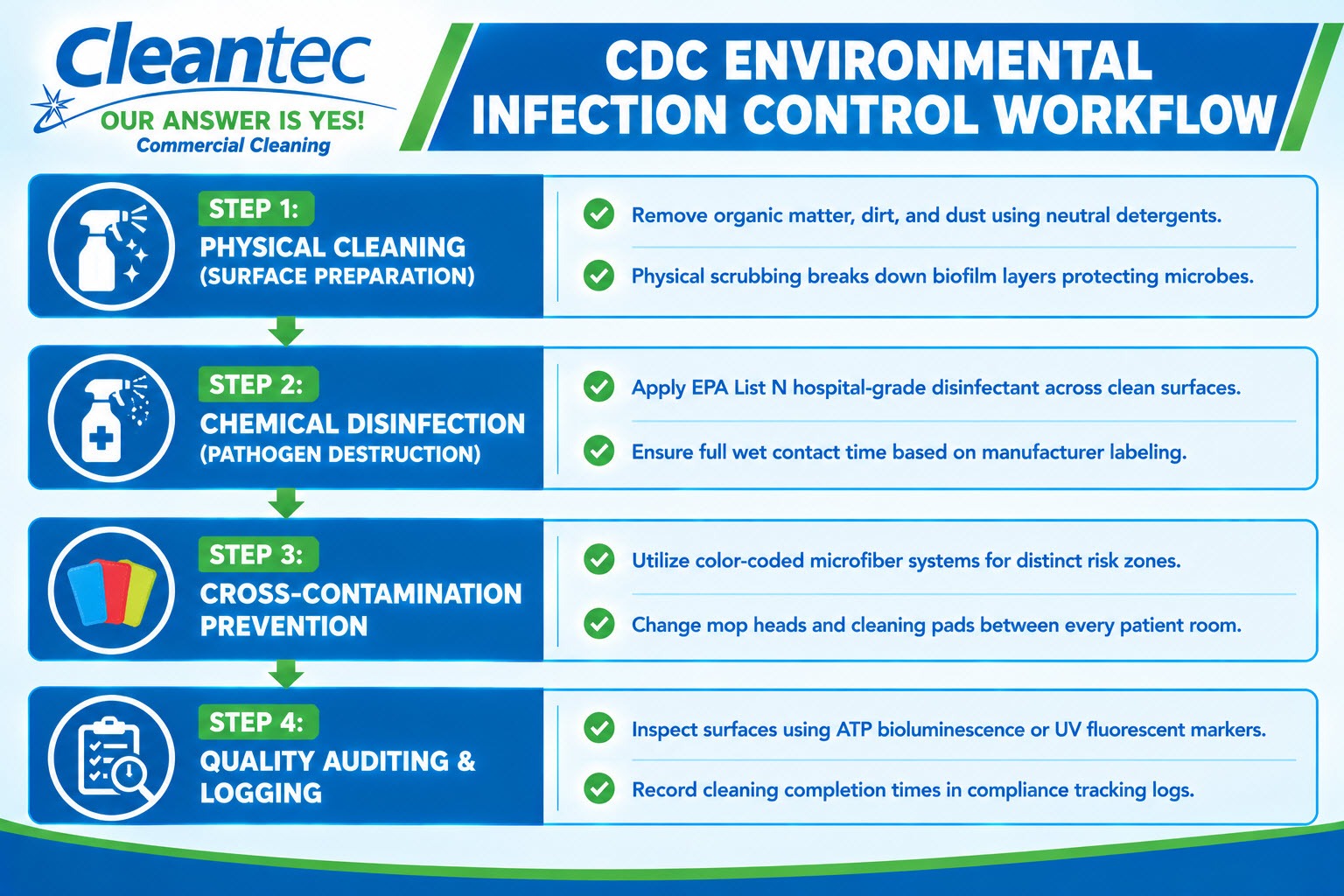
Professional medical office cleaning breaks this chain of infection through disciplined surface care. Cleantec uses color-coded microfiber systems that isolate cleaning materials by room type. Red microfiber cloths clean high-risk restroom fixtures, yellow cloths clean general clinical surfaces, and blue cloths handle non-critical administrative desks. This strict separation prevents staff from transferring bacteria from a restroom sink onto an examination table.
EPA Disinfectant Registration, Dwell Times, and Chemical Safety
Selecting proper chemical disinfectants is critical for medical sanitation. Practice managers often assume any store-bought disinfectant works, but clinical settings require EPA-registered, hospital-grade formulations.
The Critical Role of Disinfectant Dwell Time
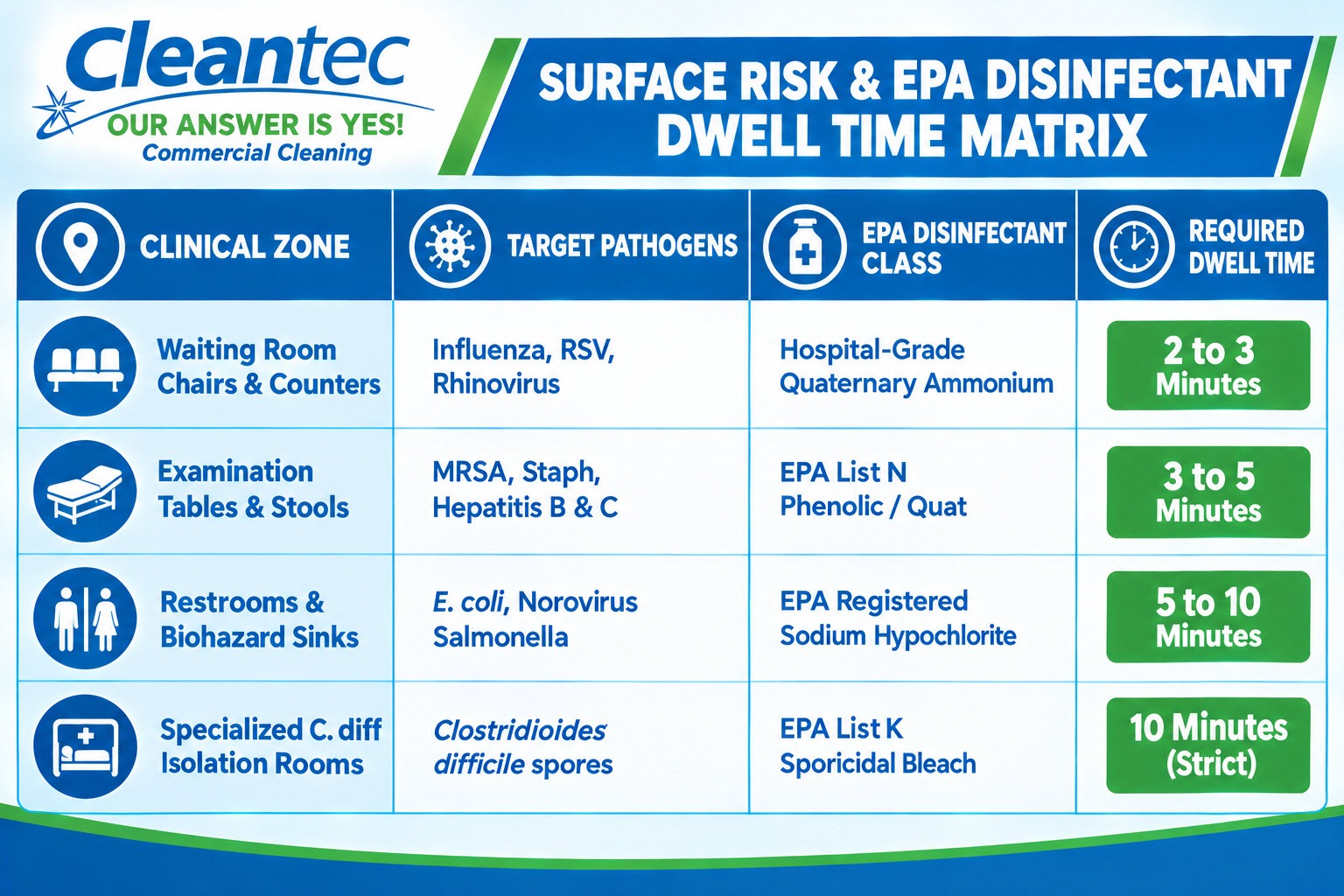
Chemical dwell time, also called contact time, represents the exact duration a liquid disinfectant must remain visibly wet on a surface to kill target microorganisms.
A widespread mistake in healthcare maintenance is spraying a disinfectant and wiping it off instantly. Wiping away chemicals after five seconds leaves active viral and bacterial populations behind. If a chemical label specifies a four-minute dwell time, the surface must remain thoroughly wet for four full minutes.
Cleantec technicians receive training on exact chemical dwell times and product application techniques. Using advanced electrostatic sprayers and calibrated application tools, Cleantec covers intricate equipment surfaces thoroughly, maintaining proper contact time without oversaturating sensitive electronics.
Green Cleaning and Indoor Air Quality
Healthcare facilities must balance pathogen destruction with occupant air quality. Harsh chemical vapors trigger respiratory distress in asthma patients and sensitive individuals.
Cleantec aligns 100% of its commercial operations with USGBC Green standards. Cleantec uses non-toxic, eco-friendly, EPA-approved products that eliminate germs while protecting indoor air quality. Using vacuum systems equipped with HEPA filtration, Cleantec captures 99.97% of airborne dust, pollen, and microscopic particles down to 0.3 microns, creating a healthy indoor environment.
In-House Cleaning Staff vs. Certified Commercial Healthcare Cleaning Services
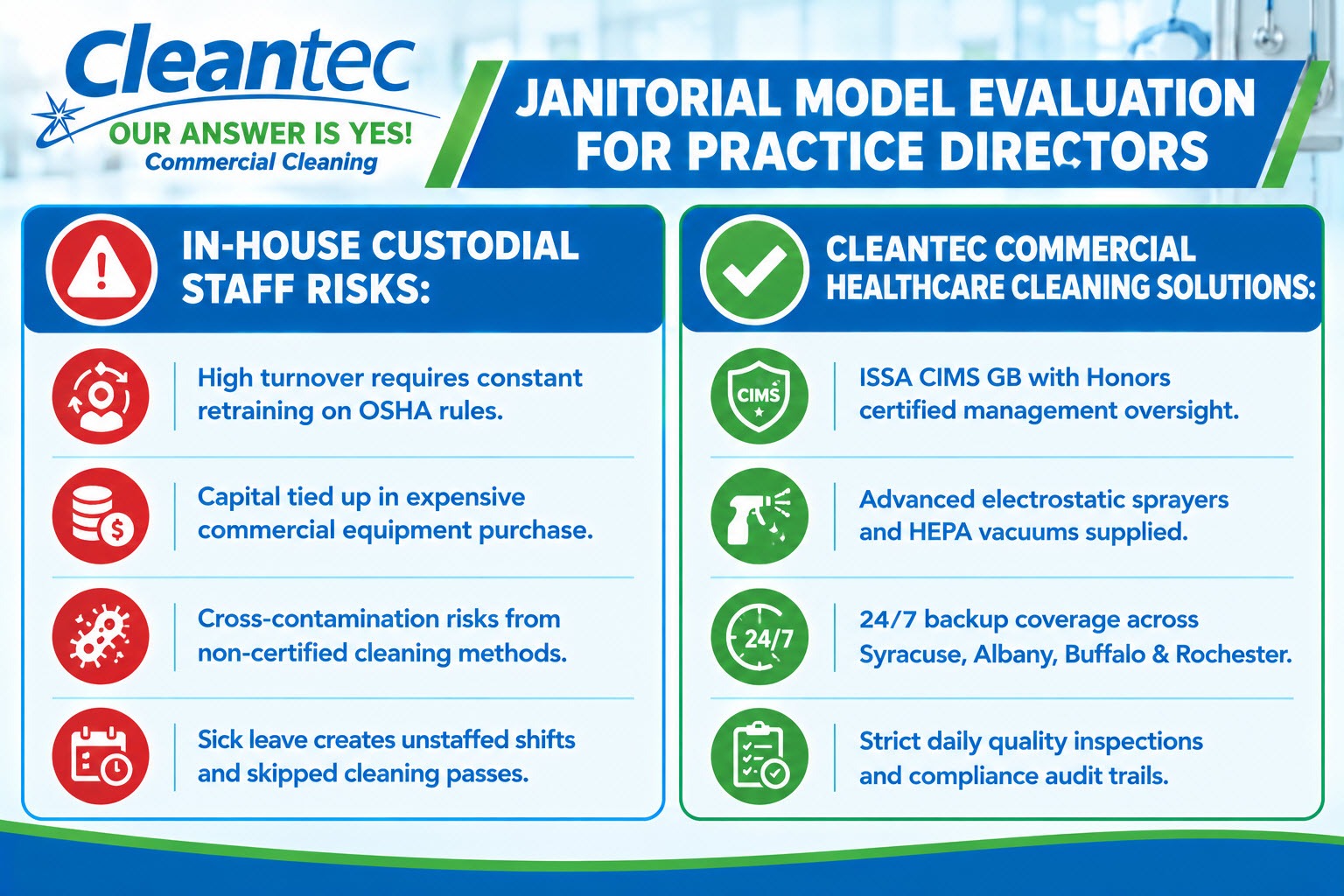
Healthcare executives often debate whether to handle janitorial duties internally or contract a specialized medical vendor. While keeping cleaning in-house appears straightforward, comparative analysis shows significant operational, financial, and compliance advantages when partnering with a certified specialist.
Comparative Analysis: In-House Custodial vs. Cleantec Healthcare Cleaning
| Operational Dimension | In-House Custodial Staff | Cleantec Healthcare Cleaning |
| Regulatory Knowledge | Variable; depends on internal training resources | Continuous training in OSHA, CDC, and EPA standards |
| Cross-Contamination Prevention | High risk if staff reuse mops and rags | Strict color-coded microfiber protocol per zone |
| Quality Control Oversight | Practice manager must conduct manual checks | Daily quality inspections and real-time tracking |
| Equipment & Technology | Basic retail mops, buckets, and vacuums | HEPA vacuums, electrostatic sprayers, auto-scrubbers |
| Shift Reliability | Gaps occur during staff illness or vacations | Guaranteed 24/7 coverage with regional backup teams |
| Industry Certification | Rarely certified in healthcare sanitation | ISSA CIMS GB with Honors certified organization |
| Financial Overhead | Payroll taxes, benefits, workers’ comp, equipment | Predictable, tax-deductible monthly contract rate |
Relying on clinical workers or general office cleaners to perform medical office cleaning creates liability exposure. Medical assistants tasked with end-of-day cleaning often rush through protocols due to burnout, missing high-risk areas. Cleantec’s specialized janitorial teams focus exclusively on sanitation, executing detailed cleaning protocols every night.
Operational Checklist: Daily, Weekly, and Monthly Healthcare Cleaning Protocols
A structured cleaning schedule maintains accountability across every square foot of a medical office. Cleantec collaborates directly with practice directors to build customized cleaning plans tailored to specific clinical workflows.
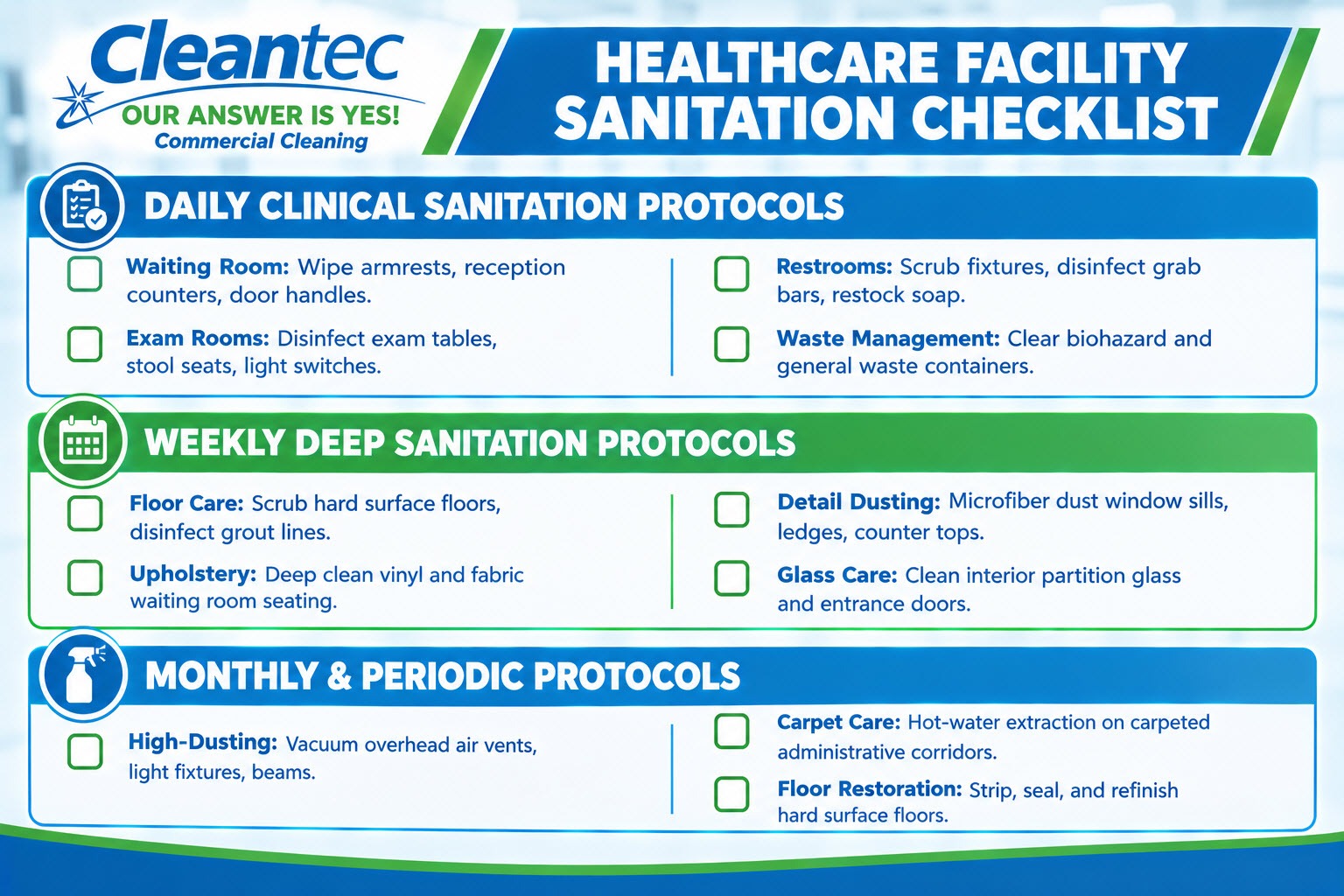
Area-Specific Cleaning Requirements
1. Waiting Rooms and Reception Lobbies
As the primary point of entry, waiting areas accumulate high microbial loads. Lobbies require daily surface wiping, high-touch disinfection, carpet vacuuming using HEPA equipment, and frequent window glass cleaning to preserve a pristine appearance.
2. Patient Examination Rooms
Exam suites demand rigorous multi-point cleaning between patient visits and thorough evening resets. Technicians sanitize exam tables, replace paper liners, disinfect blood pressure cuffs, wipe sink basins, and mop non-porous floor tile using hospital-grade disinfectants.
3. Restrooms and Handwashing Stations
Healthcare restrooms host high concentrations of pathogens. Daily maintenance includes disinfecting flush valves, faucet handles, paper towel dispensers, and door hardware, paired with floor scrubbing and supply replenishment.
4. Administrative Suites and Staff Breakrooms
Staff breakrooms represent common cross-contamination zones. Cleaning technicians sanitize refrigerator handles, microwave buttons, coffee pots, counter surfaces, and dining tables to keep staff healthy.
When Should Your Medical Office Hire Commercial Cleaning Professionals?
Practice managers often ask when it is time to transition from internal cleaning to a specialized commercial cleaning vendor. Consider these key operational indicators:
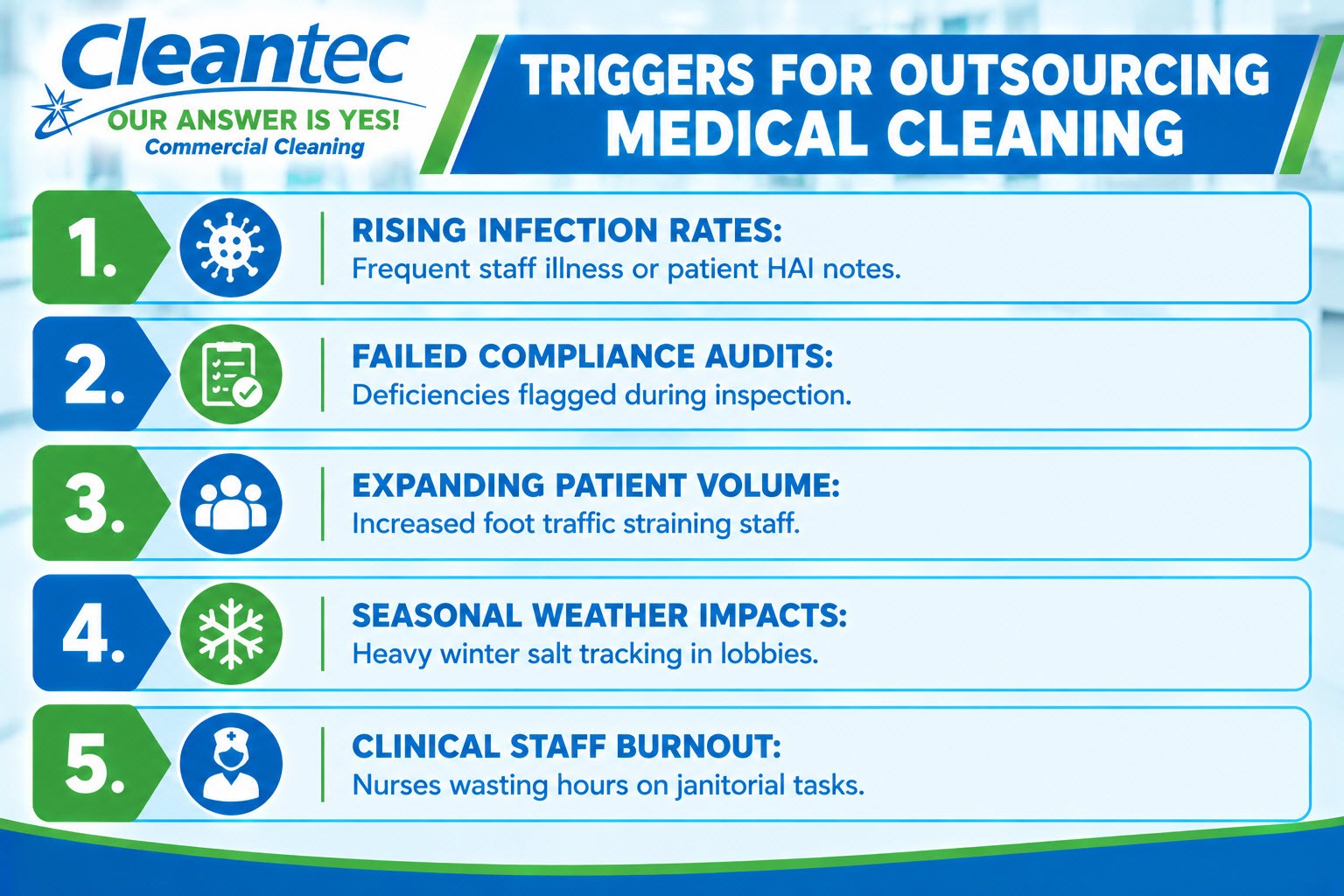
When patient volume grows, expecting clinical staff to handle end-of-day janitorial tasks leads to skipped steps, employee burnout, and compliance failures. Contracting professional medical office cleaning ensures systematic sanitation every night, allowing healthcare providers to focus entirely on patient care.
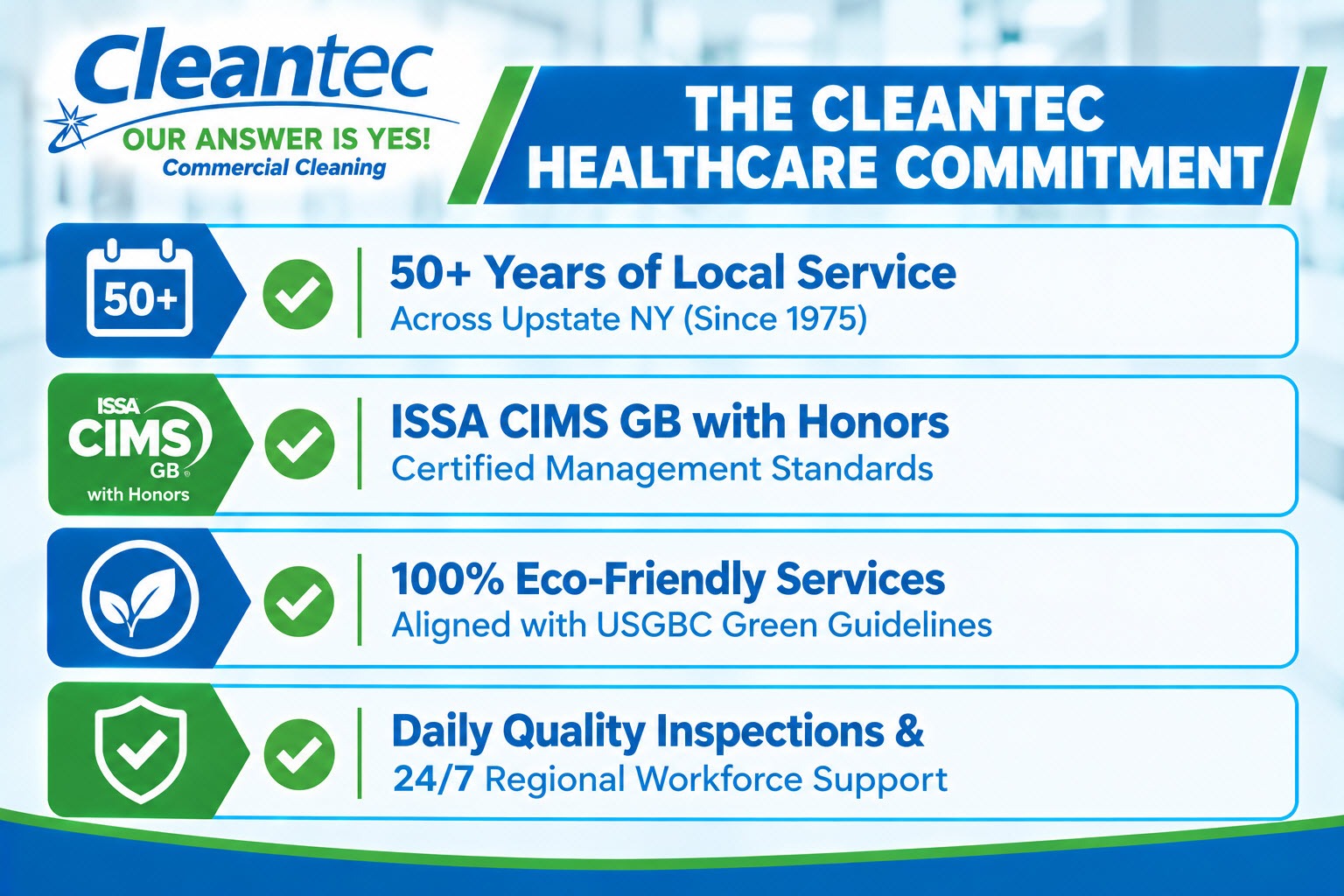
Cleantec brings a 50-year track record of excellence to healthcare facilities across Upstate New York. With established offices in Syracuse, Albany, Buffalo, Rochester, Ithaca, Binghamton, and Oriskany, Cleantec responds rapidly to regional facility demands. Cleantec’s 24/7 workforce management, daily quality inspections, and eco-friendly practices guarantee reliable results for practices of all sizes.
Frequently Asked Questions (FAQs)
How often should a medical office be professionally cleaned?
Medical offices require daily routine cleaning and high-touch surface disinfection. High-traffic waiting rooms, patient examination suites, and restrooms demand nightly sanitation, supplemented by scheduled weekly floor care and monthly high-dusting services.
What is the difference between cleaning, sanitizing, and disinfecting in healthcare?
Cleaning physically removes visible dirt and organic matter using detergents. Sanitizing reduces surface bacteria to safe levels. Disinfecting uses EPA-registered chemicals to kill 99.999% of specific pathogens, viruses, and fungi within required dwell times.
How does Cleantec prevent cross-contamination between patient rooms?
Cleantec prevents cross-contamination by implementing a strict, color-coded microfiber system. Technicians use dedicated cloths and mop heads for specific zones, changing cleaning materials between every patient room to isolate pathogens effectively.
Are Cleantec’s cleaning products safe for pediatric and allergy patients?
Yes. Cleantec aligns 100% of its operations with USGBC Green standards. We utilize non-toxic, eco-friendly, EPA-registered products and HEPA-filtration equipment that eliminate pathogens while preserving healthy indoor air quality for sensitive patients.
Partner with Upstate New York’s Healthcare Cleaning Specialists
Protecting your healthcare facility, workforce, and patients demands an accredited commercial cleaning partner with proven local experience.
Whether you manage an outpatient surgical center in Syracuse, a multi-specialty clinic in Albany, a pediatric practice in Buffalo, or a private medical suite in Rochester, Cleantec delivers custom cleaning solutions engineered around your operational schedule.
Ready to elevate your facility’s health and compliance standards?
Contact Cleantec today to schedule a site walk-through and receive a clear, no-obligation janitorial proposal tailored precisely to your medical practice.
- Direct Phone: 1 (877) 469-0543
- Direct Email: info@cleantec.us
- Request an Online Quote: https://www.cleantec.us/request-a-quote/
- Corporate Address: 1232 Tulip Street, Liverpool, NY 13090
Older Post
- Technicians Offered IICRC Classes at Cleantec
- Success Starts with a Clean Workplace
- Home Maintenance Tips for Mid-Winter
- How to Remove Tough Carpet Stains
- 7 Tips to Help Sell Your House
- Ensure Your Fire Alarm Works Properly
- Cleaning Tips to Help You Live Green
- Window Cleaning Tips from the Professionals
- Safe Proof Your Home to Prevent Storm Damage
- Cleantec Marks Two-Year Partnership with Cleaning for a Reason